
How to Be More Patient With the People You Love
Updated 2026-08-07
You did it again. Your partner asked the same question twice, or your mother started the story you have heard nine times, or your kid needed one more thing at the door when you were already late. Nothing dramatic happened. Just a clipped answer, a sigh they definitely heard, a tone that arrived a half second before you could stop it. And then the small sinking feeling afterward, because they were not doing anything wrong, and you know it.
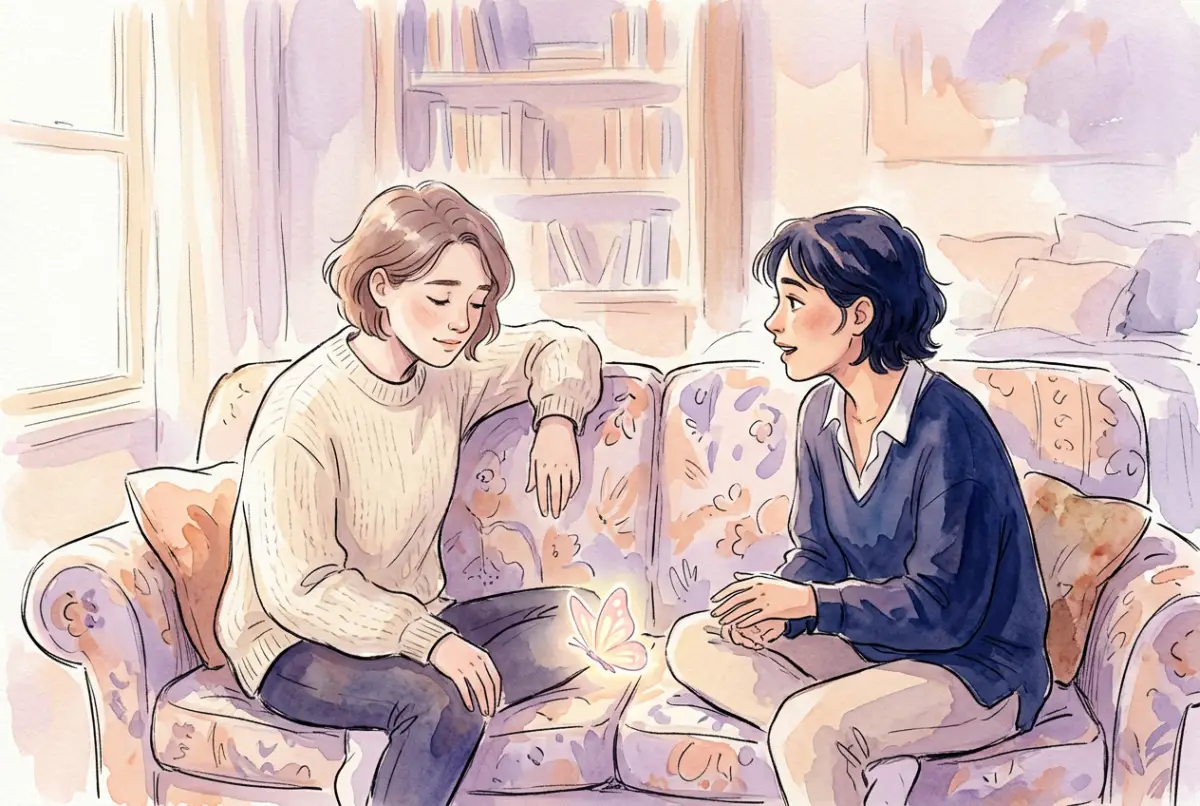
If you have been quietly worried that you are becoming an impatient person, here is a gentler and more accurate reading. Patience is not a personality trait that some people were issued and you were not. It is a gap. It is the small amount of space between what you feel and what you do, and unlike a personality, a gap can be widened. Here is how to widen it with the people who matter most.
Impatience is information, not a character flaw
Impatience almost never originates with the person triggering it. It arrives when something else is already full. You are tired, or overstimulated, or worried about money, or running eleven minutes behind, or carrying a conversation from work that you never got to finish. The person in front of you is not the cause. They are simply the last thing to arrive.
There is also an uncomfortable and oddly tender truth underneath this. We are often least patient with the people we love because they are the safest place to put it. You hold the edge in all day for colleagues and strangers, and by the time you get home there is less left to hold it with. That does not make the sharpness fair. It does mean it is not evidence that you love them less.
So the goal is not to feel less irritation. Irritation is a signal, and trying to delete it usually just buries it somewhere it will leak out later. The goal is to stop treating irritation as an instruction.
Get specific about what you are actually feeling
Frustrated is a blur. Underneath it there is almost always something more precise: rushed, embarrassed, worried, unappreciated, out of control of your own day, or lonely in a way that has nothing to do with the person asking you a question.
That precision seems to matter. In three daily diary studies by Pond and colleagues (2012), people who were better at distinguishing between their negative emotions reported fewer aggressive tendencies on the days they felt angry, compared with people whose anger came in a more undifferentiated lump. This is a correlational design, so it does not prove that getting specific causes the calmer response. But it is a striking pattern, and it points at something you can practice tonight.
The practice is small. When the sharpness rises, ask what this actually is. Not they are being annoying, which is a verdict about them, but I am worried about tomorrow and I have nothing left over, which is a description of you. Those two sentences produce very different next moments.
Put it into words before you put it into a sentence
There is a real difference between saying a feeling and saying it at someone.
In a lab neuroimaging study by Lieberman and colleagues (2007), labeling emotional images with a word diminished the response of the amygdala and other limbic regions, compared with other ways of processing the same images. That was people looking at pictures in a scanner, not people trying not to snap at their families, so it would be overstating things to say a word will defuse a hard evening. Still, it lines up with something most of us have felt: the moment a feeling gets named, it usually stops running the show quite so completely.
In practice this can be silent. This is tiredness, not anger. Or it can be spoken, gently and early, before it comes out sideways. I notice I am short right now, and it is not about you, give me ten minutes. Said in advance, that sentence protects the person you love. Said afterward, it becomes an apology instead, which also works but costs more.
Step back from yourself for a second
When you are inside a moment, you are a participant. When you can watch it from slightly outside, you become someone with options.
In research by Ayduk and Kross (2010), people who spontaneously took a step back and reflected on a difficult experience from a distance, rather than reliving it through their own eyes, showed less emotional and cardiovascular reactivity, and in a study of couples this self distancing was associated with more problem solving and less reciprocating of negativity during conflict. These were largely observational studies of naturally occurring distancing, so the direction of the effect is not settled. But as a move to try, it is free.
Concretely: ask what someone standing in the doorway would see right now. Or narrate the moment to yourself using your own name, which sounds strange and works anyway. It is not about pretending you do not feel it. It is about being a half step behind the feeling instead of directly inside it.
Ask what else could be true
Impatience runs on a story that arrives faster than the facts. They do not care. They are doing this on purpose. They never listen.
Almost always there is a competing story, and it is usually more accurate. They are tired too. They asked twice because they are anxious, not because they were not listening. They have no idea this lands the way it does, because you have never told them. They are seventy four and this story is one of the things that still feels good to tell.
You do not have to believe the kinder version. You only have to hold the harsh one loosely enough to ask the question, because curiosity and irritation cannot easily occupy the same moment. Asking what else could be true is not a technique for being nicer. It is a way of staying interested in the person instead of finished with them.
Repair quickly, because you will still lose it
You will still be short with people sometimes. Patience is not a promise never to snap again, and holding yourself to that standard tends to produce shame rather than change.
What matters far more is what happens in the next twenty minutes. Name it, specifically, and leave the excuse out. I was sharp with you earlier and you did not deserve it. I am sorry. Anything after the word but tends to quietly erase everything before it, so let the apology stand by itself, and add the explanation later if they want it.
Repaired quickly, these moments do much less damage than people fear. A relationship where things occasionally go wrong and get mended is not a failed version of a calm one. For most people, it is what closeness actually looks like.
How Murror helps you be more patient with the people you love
Often the hardest part of patience is not the pause itself. It is understanding what you were actually carrying when the sharpness arrived, and noticing the pattern before it costs you another evening.
Murror is an empathy practice built for exactly that. You open up with a caring AI companion that helps you understand what you feel and think more clearly about the people you care about, so that vague end of day frustration can become something specific enough to do something with. Instead of leaving that in your head, Murror gently surfaces insights about your relationships and small, low-pressure ways to show up, like a Moment to Care nudging you toward the person you were short with yesterday, or a Connection reminding you what actually matters to them. It is a companion and a bridge for building empathy, never a replacement for the people themselves, and never therapy.
When something you reflect on privately feels worth sharing, you can turn it into an optional takeaway to send to someone you trust, which is often how an apology you were rehearsing alone becomes a real moment of closeness. Everything you write stays encrypted and private by default, so the practice always feels safe. The goal is not more journaling. It is more understanding, so the patience you keep meaning to have is actually available when it is needed.
Patience is a practice, not a personality
The people who seem endlessly patient are rarely people who feel less. Most of them have simply built a slightly longer gap between the feeling and the response, and they protect the conditions that keep that gap open.
So start there. Notice the signal in your body before the words. Name what it actually is. Take one step back. Ask what else could be true. And when you miss, which you will, repair it quickly and without a case for the defense.
None of that requires you to become a calmer person than you are. It only asks for a few seconds, offered to the people who get the most tired version of you and love you anyway.
Frequently asked questions
Why am I so impatient with the people I love most?
Usually because they are the safest place to put it, not because you love them less. With colleagues and strangers you hold the edge in, and by the time you are home there is less left to hold it with. The people closest to you also ask the most of you, in small ordinary ways, all day long. None of that makes the sharpness fair, and it does mean the problem is rarely the person in front of you. It is almost always the amount you were already carrying when they walked up.
How do I stop snapping at my partner or my family?
Work on the gap rather than the feeling. You cannot decide to stop feeling irritated, but you can put one beat between the irritation and your mouth, and that beat is the entire skill. Notice the physical signal first, the tight jaw or the sigh building, then name what is actually happening for you before you answer. Even a few seconds is usually enough for the sharp version of the sentence to pass and the ordinary one to arrive.
Is impatience just a personality trait I am stuck with?
It is better understood as a state than a fixed trait. Your patience moves with sleep, hunger, noise, worry, and how much of your day was already spent absorbing other people, which is why the same situation can feel fine on Tuesday and unbearable on Thursday. That means the lever is often practical rather than moral. Protecting your own capacity is not self indulgence, it is the most reliable way to have something left for the people you love.
What do I do after I have already lost my patience?
Repair quickly and specifically, and do not attach an excuse to the apology. Name what you did, acknowledge the effect, and leave out the part where you explain why they made you do it, because anything after the word but tends to erase what came before it. Something as short as I was sharp with you earlier and you did not deserve it, I am sorry, does more than a long explanation. Most closeness is not built by never rupturing. It is built by mending quickly and without a fight about who started it.