
How to Make Someone Feel Included Without Making It Weird
Updated 2026-09-24
You are laughing with your friends about something that happened last summer, and out of the corner of your eye you notice the new person. They are smiling along, a half beat late, holding their drink with both hands. Nobody is being unkind. Nobody has noticed anything at all.
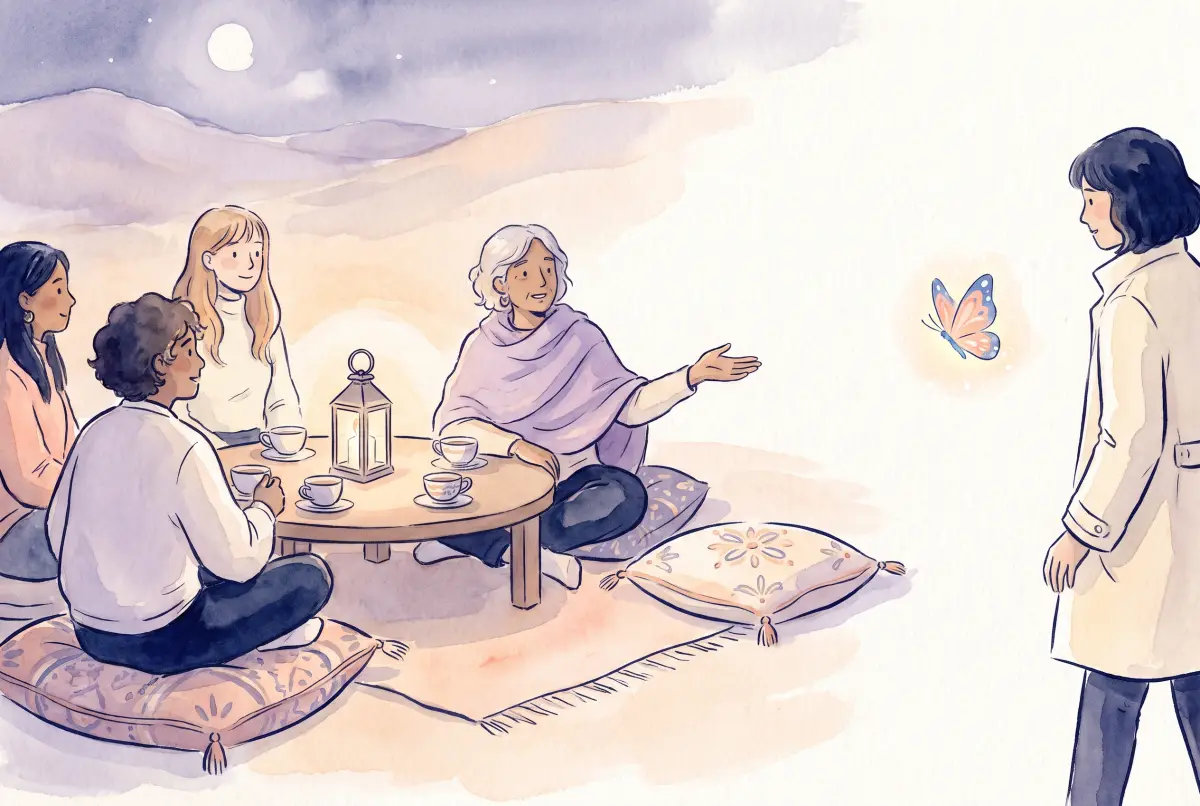
A lot of exclusion looks like this. Often nobody decided anything. It is what happens when a group of people who know each other well carry on being a group, and the person without the shared history is left standing just outside it.
The good news is that you do not need a grand gesture to change that. You mostly need to notice, and then do something small. (If someone is being left out on purpose, there is a note on that further down.)
Being left out registers fast, even when nobody meant it
Psychologist Kipling Williams, who has studied being ignored and excluded for many years, describes it in a review of the research as something people detect almost reflexively, as pain and distress. Even brief episodes of being left out were followed by sadness and anger, and by a sense that basic needs like belonging and feeling worthwhile were under threat.
The striking part is how little it takes. Much of this research uses a simple online ball-tossing game called Cyberball, where two other players quietly stop throwing the ball to you. In one study, being left out of the game was no less upsetting when the other players were described as members of a group the participants despised than when they were rivals or members of their own group. These are lab studies with strangers and a computer game, so they tell us about the first sting rather than about friendships. But they suggest the sting can arrive even when the exclusion should not matter much.
That is worth holding onto when you are the one in the middle. The new person does not know that nobody meant anything by it. They only know what it feels like from where they are standing.
You cannot see the edge from the middle of the room
When you are inside a group, it feels open. The jokes are funny, the references make sense, the conversation flows. It is genuinely hard to notice that the same conversation, heard from one step outside, is a wall of names you do not know and stories you were not there for.
This is not a character flaw. It is just the view from where you are. Familiarity often makes a group feel welcoming to the people already in it, and that feeling is not a reliable guide to how it feels to someone arriving.
So the first skill is not a technique. It is a glance around the room. Who is laughing half a beat late? Who is standing a little outside the circle of shoulders? Who has not spoken in twenty minutes?
A glance does more than you would guess
Here is the part that makes this easier than it sounds. In a field study, researchers had a stranger walk past pedestrians. When the passerby looked in their direction without giving them eye contact or any acknowledgment, those people reported feeling more disconnected than people who got a moment of acknowledgment. This was a fleeting moment with someone they would never see again, and it still moved how connected they felt.
It is one short study, and a stranger on the street is not a friend at a party. But it points at something useful: the smallest signal that someone is seen, a look, a nod, a smile that lands on them rather than past them, carries real weight. You do not have to rescue anyone. You can start by letting them know you see them.
There is also something in this for you. In other work from the same research group, the authors report that simply watching someone else be left out can cause a kind of empathic pain in the observer. If you have ever felt a small ache watching someone hover at the edge, that is not you being oversensitive. It is a signal worth acting on.
Five small moves that open the circle
None of these need a speech. They work best when they are ordinary.
Say their name. Using someone's name in a group conversation quietly tells everyone they are part of it. "Maya, you were in Lisbon last year, right?" can do more than a round of introductions.
Fill in the missing context. When the story depends on history they were not there for, give them the thirty second version. "This was the camping trip where the tent collapsed, twice." Now they can laugh with you instead of around you.
Ask them something they can actually answer. Questions about the group's shared past leave them out again. Questions about their own life, their opinions, or what they noticed tonight let them join as themselves.
Hand them a small role. Asking someone to pick the music, help carry the plates, or settle a friendly argument gives them a reason to be in the middle without having to push their way in.
Make physical room. Shift your chair, open the circle, pat the empty seat next to you. People often read bodies before they read words.
Include without putting them in a spotlight
There is a clumsy version of all this, and most of us have seen it. Someone announces "let's make sure we include Sam!" loudly enough for Sam to hear, or pours on attention for five minutes and then forgets them for the rest of the night. That can feel worse than being ignored, because now the exclusion has been named out loud.
A few things help keep it natural. Keep your moves small and steady rather than big and sudden. Do not make the person the topic. And leave room for them to choose, because some people prefer to watch for a while before they join in, and being included does not have to mean being pulled into the center. An open seat and a "come join whenever" is enough.
If you are not sure how it went, the kindest check is private and later: "It was really good to have you there. I hope you had a decent time." That tells them they were welcome, without making a scene of it.
When you are not fully in either
Sometimes the person who notices the edge is someone who is only slightly inside it. You are newer yourself, or you drift in and out of this group, and you are not sure you have standing to widen the circle.
You do. Some of the most welcoming moves come from people who remember what the edge felt like. Sitting next to the newest person and talking to them directly can feel like a risk, but it is usually a smaller one than it seems. It is often how two people who both felt a little outside end up feeling at home.
And if a group is leaving someone out on purpose, as a pattern rather than by accident, that is a different situation from the everyday drift described here. You do not have to fix it alone, and it is reasonable to put your own wellbeing first. Reaching out to the person directly, or raising it with someone who has more authority, is still a real act of care.
How Murror helps you make room for the people at the edge
Noticing the edge is easier when you have a little space to think about the people around you before the next gathering, rather than only in the middle of it.
Murror is an empathy practice built for that. You open up with a caring AI companion that helps you understand what you are feeling and the people you care about, including the quieter ones you have been meaning to know better, without judgment and without needing it all figured out first.
Over time Murror gently surfaces insights about your relationships and small, low pressure ways to show up for the people in them, like a Moment to Care nudging you to message the newer friend before the next get together, or a Connection that holds what you are learning about someone you would like to know better. When a private reflection turns into something worth saying, you can turn it into an optional takeaway you choose to share with someone you trust. Everything stays encrypted and private by default. It is a companion and a bridge toward people, never a replacement for them, and never therapy.
The door you hold open
You will not always notice. Nobody does. And if you are realizing you have been the one in the middle, that noticing is the start, not a verdict. But every group you are part of has an edge, and someone is usually standing on it.
A look, a name, a thirty second piece of context, an empty seat. None of it costs much. To the person on the edge, it can be the difference between standing near a group and being part of one.
Frequently asked questions
How do I include someone without making them feel like a charity case?
Keep it ordinary. The moves that work best are the ones you would make for anyone already in the group: saying their name, filling in the missing context, asking them something they can actually answer, handing them a small job. What tends to feel like charity is the announcement, the 'let's all make sure we include Sam' said where Sam can hear it, or a sudden burst of attention that stops the moment the conversation moves on. Aim for steady and small rather than big and obvious. If you are not sure how it landed, you can simply ask them later, one on one, whether they had a good time.
What if the person seems like they want to be left alone?
Some people genuinely prefer to watch for a while before joining, and some are tired, shy, or just not in the mood. Being included does not have to mean being pulled into the middle. A glance, a nod, an open seat next to you, and a low pressure 'come join whenever' leave the door open without making them walk through it. What matters is that they know the door is there. If they still stay on the edge, that is their choice to make, and respecting it is its own kind of inclusion.
What should I do if my group is leaving someone out on purpose?
That is a harder situation than the everyday drift this article is about, and you do not have to fix the whole group on your own. You can still make a quiet difference: talk to the person directly, invite them to something smaller, or say to one friend in the group that it does not sit right with you. If it looks like bullying, harassment, or a pattern at work or school, it is reasonable to bring in someone with more authority, such as a manager, a teacher or HR, and to put your own safety first while you do it.