
Should You Go to Bed Angry? What Sleep Research Suggests
Updated 2026-11-16
It is late. The argument started over something small, the dishes or a text that went unanswered, and somehow it is now about everything. You are both exhausted. Neither of you has said anything new in twenty minutes. And somewhere in the back of your mind, a piece of advice you have heard your whole life keeps repeating: never go to bed angry.
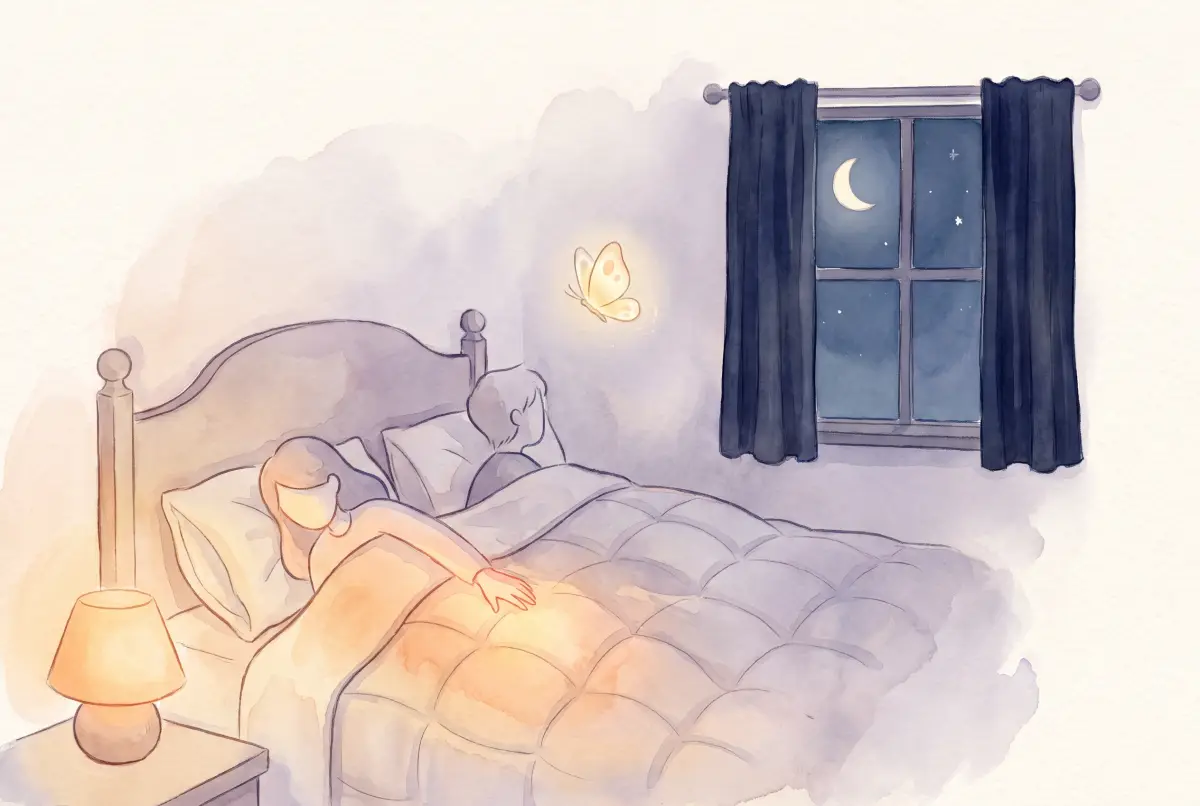
So you keep going. Or you lie there in the dark, wide awake, wondering whether falling asleep now means you have failed.
If you have been in that spot, it says something kind about you. You are trying to protect the relationship. This guide looks at what research on sleep and conflict suggests, why the old rule gets one thing right and one thing wrong, and how to put an argument down for the night without leaving the other person feeling alone.
One note first. This is about ordinary disagreements between people who feel safe with each other. If arguments leave you afraid, or someone will not let you sleep until you give in, that is not a communication problem to solve with better timing. It deserves support from someone you trust.
What the old rule gets right
The advice to never go to bed angry usually comes from a good place. People who say it have often felt what happens when a hurt is left alone too long. It hardens. A small thing becomes a story about who the other person is. The silence the next morning feels colder than the argument did.
So the heart of the rule is wise: do not let distance quietly set in. Do not leave someone you love feeling that you have turned away from them.
Where the rule goes wrong is in assuming the only way to prevent distance is to finish the argument tonight. Those are two different goals. You can protect the connection tonight and leave the problem for tomorrow.
What a tired brain does to an argument
There is a reason late-night fights so often go in circles. Several studies suggest that sleep and conflict are linked.
In a pair of studies on sleep and relationship conflict, people in a two-week daily study reported more conflict with their romantic partners after nights of poor sleep. In a second study, couples came into a lab to talk through a disagreement. When one partner had slept poorly, both partners were less accurate at reading what the other was feeling during the conversation. Couples resolved the conflict most when both of them were well rested. Sleep was not manipulated in these studies, so they show a link, not proof that poor sleep causes worse fights.
In a small lab study, 37 healthy volunteers were randomly assigned to a night of total sleep deprivation, a normal night at home, or two tests in one day. Afterward, the sleep-deprived group scored lower on two measures of emotional empathy, how much concern they reported feeling and how much physical arousal they reported, than both other groups. A full night without sleep is more extreme than a late argument, so it is plausible that tiredness lowers empathy, though these studies cannot tell us how much a late argument does.
And in an observational study of couples, when both partners reported sleeping less recently, their discussion of a marital problem was more hostile than when at least one of them had slept more.
None of these studies tested the bedtime rule itself. But together they suggest something most of us already feel at 1 a.m.: the version of you that is trying to win this argument right now is probably not your most understanding self. Neither is theirs.
A pause is not the same as a cold shoulder
For many people, the worry about going to bed angry is a worry about being left. If I stop now, will they think I do not care? Will I wake up next to a stranger?
That is why how you stop matters more than whether you stop. There is a real difference between two ways a night can end.
A cold shoulder has no return date. One person rolls over, goes quiet, or leaves the room without a word. The message the other person hears is: you are on your own with this.
A pause has a way back built into it. It says: I am still here, I still care, and I want to do this when we can both do it well. The argument is set down, not dropped.
The topic is the same either way. The difference is whether the other person falls asleep feeling left or feeling held.
How to call a bedtime truce
A good truce is short. It does not reopen the argument or get in one last point. It usually has three parts.
- The care. Start with the relationship, not the disagreement. "I love you." "I do not want to go to sleep feeling far from you."
- The honest reason. Name the tiredness, and own it as yours. "I am too tired to be fair right now." "I keep saying the same thing and I am not listening well anymore."
- The time. Give it a specific place to come back to. "Can we talk at breakfast?" "Let's pick this up after work tomorrow."
Put together, it might sound like this: "I hate going to sleep like this, and I am not giving up on it. I am just too worn out to be kind about it right now. Can we talk tomorrow at breakfast?"
The third part matters most. A specific time helps a pause feel like a promise. Without it, the other person may hear "I am done talking about this," which is exactly the fear the old rule was trying to prevent.
You never owe a promise or reassurance you cannot safely give. If you do not feel safe, putting your own safety first comes before any of this.
If your partner is the one who asks for a pause, it can help to remember that a request to stop is often an act of care, not a dismissal. You can say yes to the pause and still ask for what you need, like "Okay. Can I have a hug before we sleep?"
What to do with the feeling while you fall asleep
Agreeing to stop does not mean your mind will. Many people lie awake replaying the argument, polishing the case they will make in the morning.
A gentler use of that time is to get curious instead of prepared. You might ask yourself one quiet question: what do I most want them to understand? Not what they did wrong, but what was underneath it for you. Maybe it was not about the dishes at all. Maybe it was about feeling like you carry more than your share, or about feeling unheard.
Then ask a second question: what might they want me to understand? You do not need the right answer. Just holding the question can soften the story you are telling yourself about them.
If it helps to set the thought down, write that one sentence somewhere and let the rest wait. It will still be there in the morning.
The morning after: reopen, do not restart
When the time comes, start somewhere new, not where you left off. Begin with the connection again. "Thanks for stopping last night. I have been thinking about it."
Then share what you noticed overnight, especially anything about your own side. "I think I got so stuck on the dishes that I never said what I actually meant, which is that I have been feeling stretched thin."
Sometimes you will find the argument has shrunk to almost nothing in the daylight. That is worth noticing honestly, together. But be careful not to let "it does not matter anymore" become a habit of never coming back. If something keeps returning, it matters, and it deserves the conversation you promised.
When it should not wait until morning
A pause is not always the right call. In ordinary disagreements, some nights need a little more before sleep.
If one of you is leaving early, traveling, or will not see the other for a while, a bit more connection tonight may matter. If your partner is frightened the relationship itself is in danger, a few words of reassurance can make the difference between a hard night and a sleepless one. "We are okay. I am upset, but we are okay."
You do not have to settle the topic to settle the fear. Reassurance tonight and the real conversation tomorrow can go together.
How Murror can help
Murror is the empathy practice, a place to understand what you feel and the people you care about, so you can show up for them a little better.
After a hard night, you can open up to a caring AI that helps you make sense of what happened. You might talk through the argument and notice, as you put it into words, what you were really asking for, and what the other person might have been asking for too. Often the fight looks different once you can see the need underneath it.
Murror also offers gentle insights about your relationships and small, low-pressure ways to show up for people. Moments to Care can suggest simple ways to reach out, and in Connections you can draft a thoughtful message, like the first words you want to say at breakfast.
If something you realize in private feels worth sharing, you can turn it into an optional takeaway to share with someone you trust. Nothing leaves unless you choose it, and everything stays encrypted and private by default.
Murror is not therapy, and it is not a replacement for the people in your life. It is a quiet space to understand yourself and others, so the next conversation with someone you love can start from a softer place.
One small thing to try tonight
You do not need to wait for a fight. Tonight, or the next calm evening, you could agree on a truce phrase together, something either of you can say when an argument runs late. "Breakfast?" works for some couples. "Let's sleep on it, together" works for others.
Choosing it while you both feel close is a way of saying, ahead of time, that even on the hard nights, you are on the same side.
Frequently asked questions
Is it okay to go to bed angry?
For ordinary disagreements between people who feel safe with each other, often yes, as long as it is a pause and not a cold shoulder. In lab and daily studies, poor sleep was linked with more conflict, less accurate reading of a partner's feelings and more hostile discussions, although no study we know of has tested the bedtime rule itself. A short truce that says you care and names a time to talk again may do more for the relationship than pushing on at one in the morning.
What should I say to my partner before bed after a fight?
Keep it short and say three things: that you care, that you are too tired to do this well, and when you will come back to it. For example: I love you and I do not want to leave it like this, but I am too tired to be fair right now. Can we talk at breakfast? Naming a time can help a pause feel like a promise instead of a door closing. Only promise to come back if it feels safe to.
When should you not wait until morning to talk?
If you feel afraid, or someone will not let you sleep until you give in, that is not a communication problem, and support from someone you trust or a local service can help. In ordinary disagreements, some nights still need a little more before sleep, such as when one of you is leaving early or is frightened the relationship is in danger. Then reassurance tonight can help, even if the topic waits.