
Always the One Reaching Out? What the Imbalance Means
Updated 2026-07-15
It is late, and you are scrolling back through a thread. You sent the last message. And the one before that. And, if you are honest with yourself, the one before that too. You are not exactly angry. You are doing quiet math, the kind that arrives at eleven at night: if I stopped reaching out, how long would it take before anyone noticed?
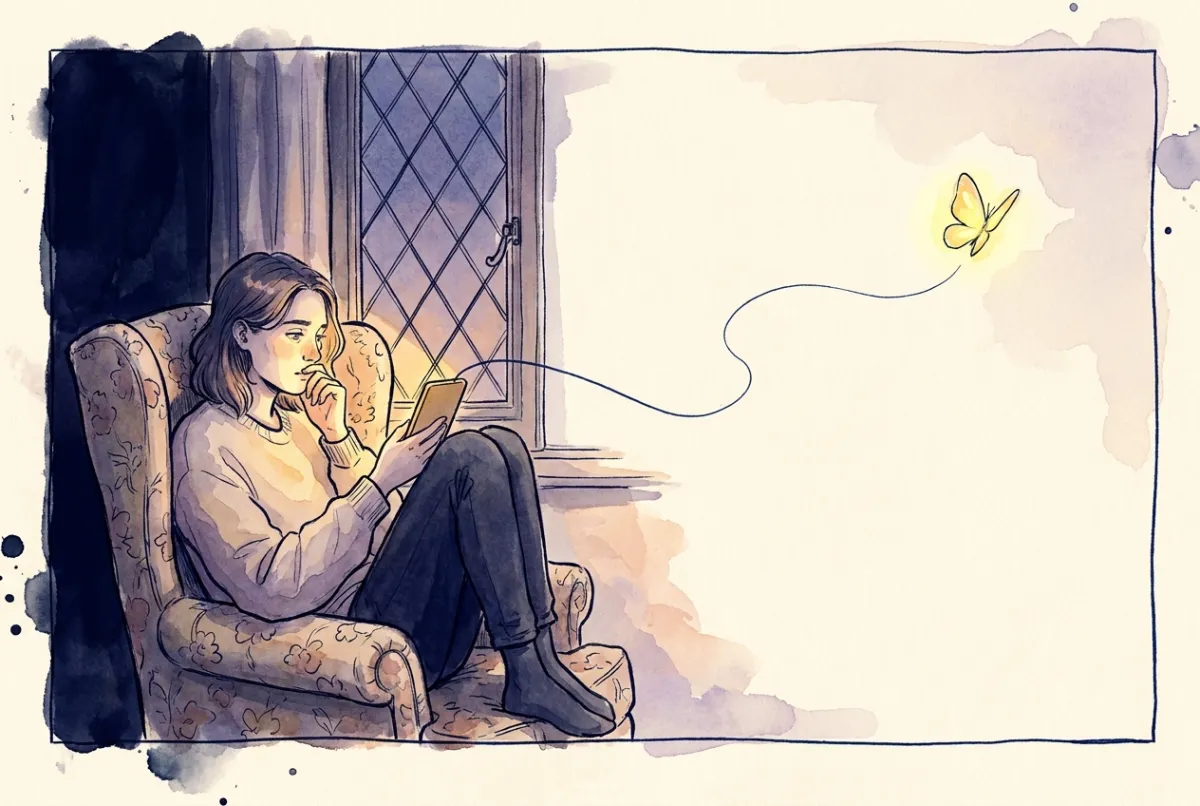
If that question has ever crossed your mind, you are in good company, and you are not being dramatic. Being the one who always reaches out is a specific kind of lonely, because it happens inside a relationship rather than outside of one. Here is how to read that imbalance more accurately, and what to do with it that is neither pretending nor punishing.
Your tally is not pettiness
The first thing to say is that keeping count does not make you petty or needy. People do not tally things they do not care about. That running list exists because you love someone and you have nowhere to put the love, so it turns into arithmetic.
It helps to name what the feeling actually is. It is rarely simple anger. More often it is a stack: tenderness for them, tiredness from carrying it, embarrassment for minding, and underneath everything a small fear that you might be more replaceable than you thought. That last one is the part that stings, and it is also the part most likely to be untrue.
So before you decide anything about the friendship, get clear on what you feel. This is not a soft suggestion, it is the part that changes your next move. In a lab study using brain imaging, putting feelings into words was associated with a reduced response in the amygdala, a region involved in processing emotionally charged material. That is not the same as feeling better, and it will not make anyone text you back. But naming the feeling first is still a better starting point than deciding at eleven at night while feeling replaceable.
Capacity and care are not the same thing
Here is the reading error most of us make. We treat frequency of contact as a scoreboard of affection, when very often it is a scoreboard of bandwidth.
Consider what is genuinely true of the people around you. Some are drowning: a new baby, a sick parent, a job that is eating them, a depression that makes the phone feel like a brick. Some pull back when things get close, without quite knowing why. Some are simply bad at time and honestly believe they saw you last month when it has been since March. And yes, some have quietly let the friendship become a low priority.
Those look identical from inside your text thread. All of them produce the same thing on your screen, which is nothing. This is why the tally is such a poor instrument. It cannot tell the difference between someone who stopped caring and someone who can barely stand up, and those two facts call for completely opposite responses from you.
You are probably misreading how you land
There is a second error, and this one is stranger, because it works against you specifically.
People are generally worse than they think at knowing how much others enjoy them. Researchers have described what they call a liking gap. Across lab conversations between strangers and field settings including first year students getting to know their dorm mates, people systematically underestimated how much their conversation partners liked them, and the gap lingered over months as those relationships developed. The warmth was there. People just could not feel it pointed at them.
The same bias shows up in reaching out. In a series of preregistered experiments, researchers found that people underestimated how much others appreciate being reached out to, including simple check ins and small gifts, and that the recipient's surprise was associated with greater appreciation. The effect was larger when the contact came from someone more socially distant. Whether it holds just as strongly for a close friend you have quietly half written off, the research does not say.
Put those together and something worth sitting with appears. The message you are tired of sending is probably more welcome than you believe. That does not obligate you to keep sending it. It does mean the story you are building at eleven at night, the one where you are a mild inconvenience they tolerate, is being told by an unreliable narrator.
What to do instead of going quiet
The instinct is to stop and see what happens. It feels like dignity. It is usually just a slower way of losing the friendship, and it gives you no information you did not already have, because you already know they rarely go first.
Try these instead.
Name the pattern to yourself before you name it to them. Write down what you have actually observed, in plain terms, without the verdict attached. "I have started the last six conversations" is an observation. "They do not care about me" is a conclusion you have not earned yet. Keeping those two separate is most of the work.
Ask once, kindly and directly. Not an ultimatum, not a performance of hurt. Something small and real: "I have noticed I am usually the one who pings first. I am not upset, I just miss you and I wanted to check we are good." Say it and then let there be silence. What comes back, including the shape of the pause, will tell you far more than another month of counting will.
Ask what is going on with them before you assume it is about you. "How are you actually, not the short version?" Sometimes the answer is that they are underwater and have been for a while, and the imbalance in your friendship is the least of it.
Adjust the volume, not the affection. You are allowed to spend less energy somewhere without loving the person less. Move a friendship from weekly to seasonal. Let it be a lighter thing. That is not a punishment or a test, it is honest accounting of what you have to give, and it lets the friendship survive at a size you can actually carry.
Go where the reaching is mutual, too. If every relationship in your life needs you to start it, the problem may be less about any one friend and more about how much of your care is aimed at people who cannot currently catch it. Point some of it somewhere it comes back.
How Murror helps you understand the people you care about
Before you send another message, there is the part no one sees: figuring out what you actually feel about it, and what the other person might be carrying.
Murror is an empathy practice built around exactly that. You open up with a caring AI companion that helps you make sense of what you feel and notice the people who are on your mind. Instead of that reflection staying stuck in your head at eleven at night, Murror gently surfaces insights about your relationships and small, low pressure ways to show up, like a Moment to Care nudging you toward someone you have been quietly missing, or a Connection reminding you of what matters to them. It is a companion and a bridge to the people in your life, never a replacement for them, and never therapy.
When a private reflection turns into something worth saying out loud, you can turn it into an optional takeaway to send to someone you trust, which is often how a thought that circled for weeks becomes a real conversation. Everything you write stays encrypted and private by default. The goal is not to help you keep better score. It is to help you understand the imbalance clearly enough to choose your next move on purpose, instead of at the mercy of a late night story about your own worth.
Being the one who reaches is not a flaw
It is worth remembering what your side of this actually is. You are the person who notices. You remember the hard week, you feel the gap, you close it. That is not desperation. It is a talent for love, and the people on the other end of those messages are luckier than they have told you.
You are allowed to want it returned. You are allowed to say so, out loud, to the actual person. And you are allowed to carry some friendships more lightly, without deciding that anyone failed. Most of the time the imbalance is not a verdict on you. It is just two people with different amounts of room, trying to stay in each other's lives anyway.
Frequently asked questions
Why am I always the one who texts first?
Usually because you are the one who notices. Reaching out takes a particular kind of attention, remembering that someone had a hard week, noticing a gap, deciding to close it. Not everyone tracks relationships that way, and many people who care deeply are simply less aware of time passing. An imbalance in who sends the first message is real, and it is worth understanding, but on its own it is a weak measure of how much you are loved.
Should I stop reaching out to see if they notice?
Going quiet as a test tends to hurt everyone and teach you very little. If they do not reach out, you learn nothing new, because you already knew they rarely initiate. If they do, you will wonder whether it counts. A direct, gentle conversation gives you a real answer, and it does not cost you the friendship in the meantime. Adjusting how much energy you spend is fair. Using silence as a trap is a different thing.
How do I know if a friendship is worth the effort?
Look at what happens when you are actually together, not at who typed first. Do you feel known, relaxed, glad you came? Do they show up when it truly matters? Some people are terrible at maintenance and wonderful in a crisis. If the friendship feels warm in the room and only uneven in the logistics, it is usually worth carrying. If you feel small, unseen, or like a chore even in person, that is different information.