
How to Invite People Over When You're Nervous Nobody Will Come
Updated 2026-10-31
You have thought about it for weeks. A few people over for dinner, a Sunday afternoon, tea and something sweet. Then the other thoughts arrive. What if they say no? What if they say yes and the room goes quiet? What if you set the table and nobody comes? So the message stays unsent, and the evening stays a picture in your head.
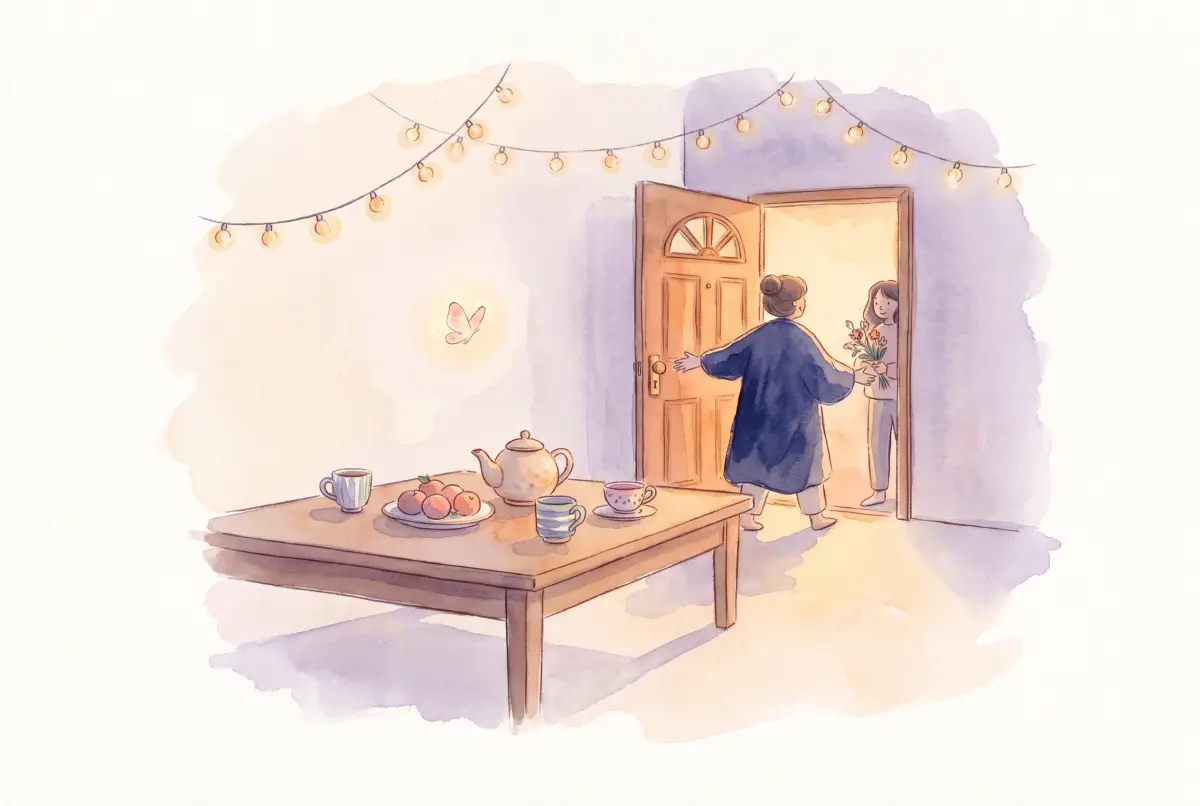
If that sounds familiar, you are not being dramatic. You are being human. Inviting someone is one of the more exposed things we do for friends, and it is also one of the kindest.
The fear is about being wanted, not about the snacks
Notice what the worry is actually made of. It is rarely about the pasta. It is the quiet question underneath: do I matter enough that people will show up for me?
An invitation makes that question visible, and a declined invitation can feel like an answer to it. That is why one "sorry, can't make it" can land so much harder than the same words about a work meeting.
Here is the gentler reading. Most declines are about calendars, tiredness and other plans. They are rarely a verdict on you. Holding that thought does not make the nerves disappear, but it takes the sting out of the worst case.
People are usually more glad to be asked than we guess
We tend to assume that other people would rather be left alone than be reached for. In a series of field and lab experiments, Epley and Schroeder (2014) asked commuters on trains and buses to connect with a stranger, stay disconnected, or commute as usual. Those who connected reported a more positive ride, even though other participants had predicted that solitude would be nicer. The researchers suggested that part of the gap comes from underestimating how interested other people are in connecting.
That study involved strangers on a commute, not dinner guests, so it cannot tell you exactly how your friends will feel. But it points the same way your own history probably does. Think of the last time someone thought of you and asked you over. You probably felt a small warm lift, even if you were tired.
Your friends may be waiting for someone to go first. You can be the one.
Shrink the evening until it cannot fail
Fear gets quieter when the plan gets smaller. A few ways to do that:
- Start with one or two people. A table for two or three is a conversation. A table for ten is an event you have to manage.
- Set an end time. "Come around six, we will wrap up by nine" lets everyone relax, including you.
- Keep the food easy. One main dish, something to drink, something sweet. Or ask a guest to bring one small thing, which many people enjoy because it gives them a way to contribute.
- Pick a daytime option. A walk and tea, or a slow Sunday lunch, often feels lighter than a night out.
- Decide what a good evening is before it starts. For example: "We talked and I felt a little closer to them." That is a goal you can reach even if the guest list is small.
None of this is a lesser version of hosting. It is the kind that people actually say yes to, and the kind you may do again.
Write an invitation that is easy to say yes to, and easy to decline
The most inviting message is clear and gentle at the same time. It names the day, the time and the plan, and it leaves room for a no.
"I am making soup on Saturday around six and would love to have you over. Totally fine if it does not work, I will ask again another time."
Three small things are working here. A specific plan is easier to answer than "we should get together sometime." The end is easy to picture. And the last line tells the other person that a no will not cost them anything, which tends to make a yes feel easier to give.
If you are inviting several people, send individual messages instead of a group chat when you can. A group thread can slip into silence, and everyone waits to see what the others will say. A personal note feels like "I wanted you there."
Why sharing a meal is worth the nerves
Part of the reason food and company go together is simple: it gives everyone something to do with their hands while they get to know each other. There is some evidence that it matters beyond that, too.
In a UK national survey, Dunbar (2017) found that people who ate socially more often reported feeling happier and more satisfied with life, trusted others more, were more engaged with their local communities, and had more friends they could depend on. Evening meals where people felt closer to those they ate with tended to involve more people, more laughter and more reminiscing. The author's analysis pointed toward eating together leading to closeness rather than the reverse, but a survey like this cannot prove cause and effect. People who are already well connected may simply host and share meals more often.
What it does suggest is that a shared table is a pleasant place for closeness to grow, and that you do not need a perfect event for it to work. Laughing and remembering things together is a very low bar.
If someone says no, or nobody answers
This is the part most of us dread, so it is worth planning for.
- Let the first reply sit before you interpret it. Most people answer late, not never.
- Send one light follow-up, to one person. "No pressure, just wanted you to know I would love to see you" is enough.
- Keep your story kind. "They are busy" is more likely to be true than "they do not care," and it costs you less to believe.
- Hold the evening anyway if you can. Even one guest is a real evening, and one honest conversation can matter more than a full room.
- Ask again later. Plenty of friendships grow from the second or third invitation, not the first.
If it keeps hurting, it can help to say it plainly to one trusted person: "I am nervous about hosting because I am afraid no one will come." Saying it out loud usually makes it feel smaller, and the person you tell may well say, "I would come."
How Murror helps you open the door
The hardest part of hosting is often the thinking before it, the loop of what-ifs that makes sending a message feel impossible.
Murror is an empathy practice built for moments like this. You open up with a caring AI companion that helps you understand what you are feeling, whether that is excitement, dread or both, and what you are really hoping for from the evening. It also helps you think about the people you want to invite, so a quiet reply reads less like rejection and more like a busy week.
Over time, Murror surfaces gentle insights about your relationships and small, low-pressure ways to show up, like a Moment to Care nudging you to reach out to one friend, or a Connection that holds what matters to each of them. When a private reflection turns into something you want to say, you can turn it into an optional takeaway to share with someone you trust. Everything stays encrypted and private by default. Murror is a companion and a bridge toward people, never a replacement for them, and never therapy.
A table big enough for the people who come
Nobody needs a flawless home or a long guest list for this to count. You need a day, a time, a simple plan and the willingness to ask.
This week, choose one person and send one message with a real plan in it. Then let the evening be small, warm and easy to repeat. The people worth gathering are usually glad to be asked.
Frequently asked questions
Why does inviting people over feel so scary?
Because an invitation puts a small question on the table: do you want to be with me? A no, or a silence, can feel like an answer to that bigger question. Most of the time it is only a full calendar, but the fear is real and very common.
What if nobody replies to my invitation?
Give it a day or two, then send one light follow-up to a single person, like "Thinking of you, still hoping to see you Saturday if you can." Busy people often mean to answer and forget. A quiet reply says more about their week than about you.
Does my home or my cooking have to be impressive?
No. People tend to remember how welcome they felt, not whether the food was perfect. A simple meal, a clear start and end time, and your full attention is plenty.