
How to Set Boundaries Without Hurting Someone
Updated 2026-08-09
For a lot of us, the word boundary arrives with a knot attached. It sounds like a door closing, like something you do to a person rather than for a relationship. So we say yes to the call we do not have energy for, absorb the comment that stung, take on the favor that costs us a whole evening, and tell ourselves it was the loving thing to do. Then we wonder why we feel further away from someone we just gave so much to.
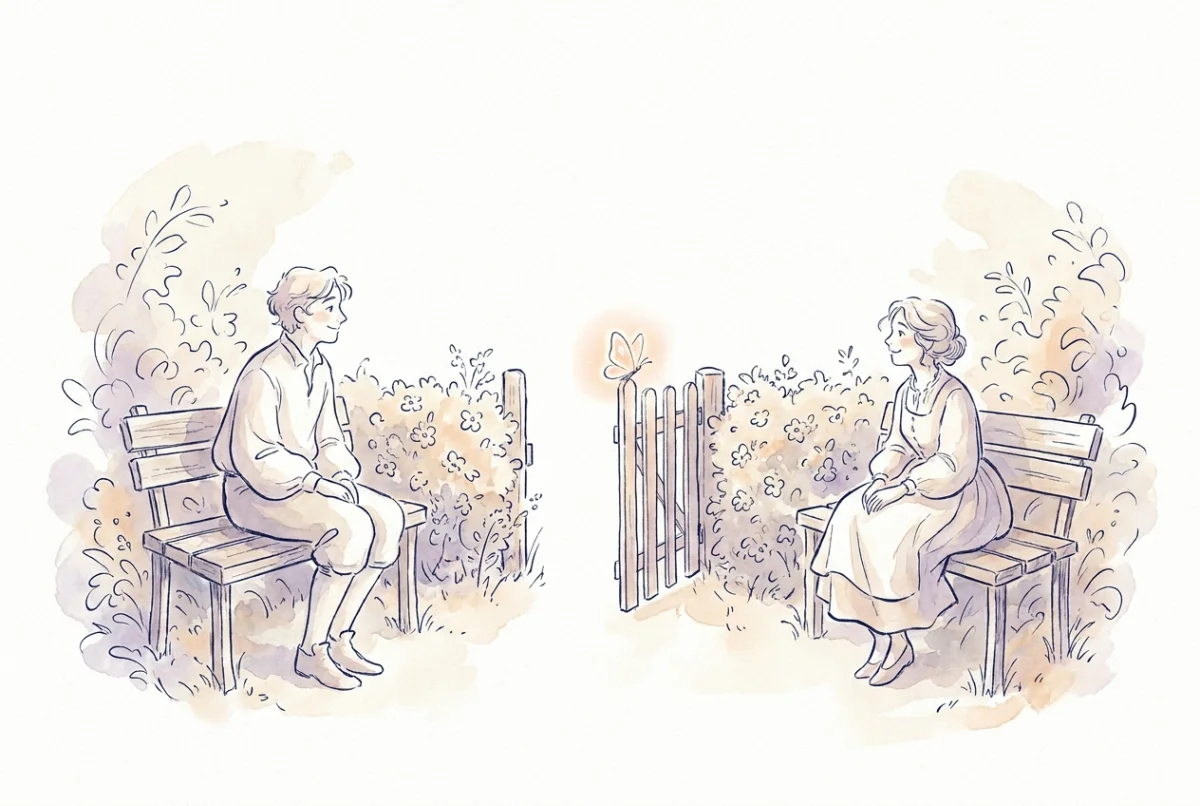
The kinder truth is that a boundary is not a wall. It is a gate you are willing to describe out loud. Done well, it does not create distance, it prevents the kind that builds quietly when you keep giving what you do not have. Here is how to say what you need in a way that protects both the other person and the closeness between you.
Get clear on what a boundary is actually for
A boundary is not a punishment, a test, or a verdict on someone's character. It is information. It tells the other person where your real capacity ends, so they can stop guessing and stop accidentally asking for more than exists.
Without that information, people are left reading a version of you that is not quite accurate. They ask again because last time you said yes. They keep bringing the same conversation at midnight because you always answered. None of that is malice. It is a reasonable response to the map you handed them.
This reframe matters because it changes the emotional weight of the sentence you are dreading. You are not withdrawing love. You are correcting a map, so that what you do give can be given fully.
Notice the resentment before it becomes distance
The most common reason a boundary gets set too late is that we do not register the cost until it has accumulated. There is a quiet, almost invisible drift where over giving stops being generosity and starts being self erasure.
Researchers have a name for the extreme end of this pattern, unmitigated communion, meaning an overinvolvement with others paired with a neglect of the self. Across three studies, including a ten year longitudinal design and a daily diary study, this pattern was associated with poorer psychological adjustment and more depressed mood. These are correlational findings rather than proof of cause, and the studies looked at a broad personality tendency rather than any single moment of saying yes. But the direction is worth taking seriously, because most of us learned that focusing entirely on others is simply what love looks like.
So treat resentment as a signal instead of a character flaw. If you notice yourself keeping a quiet tally, rehearsing what you would say if you were braver, or feeling a small drop when a certain name appears on your phone, that is not you becoming a worse person. It is usually a boundary that needed saying a few weeks ago.
Name it to yourself before you name it to them
Most boundary conversations go badly because we open our mouth while the feeling is still a shapeless knot. What comes out is either too sharp or too vague to be useful, and then we spend the next hour repairing the delivery instead of the issue.
Give the feeling words privately first. This is a small act with real effects. In a lab study using fMRI, putting feelings into words, what researchers call affect labeling, was associated with reduced amygdala activity in response to negative images. It was a controlled lab setting rather than a hard conversation with your sister, so hold the finding modestly. Still, the practical version is reliable enough to lean on: writing down what you actually feel and what you actually need tends to lower the heat before you speak.
Try to finish three sentences before the conversation. What I feel is. What I need is. What I am afraid will happen if I say it is. That third one is often the real obstacle, and seeing it written down usually shrinks it.
Say the yes that lives inside your no
Every boundary contains something you are protecting. Lead with that, and the same sentence stops sounding like rejection.
Compare two versions. I cannot talk tonight. Versus, I want to actually be present for this, and I have nothing left tonight, can I call you tomorrow morning. Both decline. Only one tells the other person they still matter, and only one gives them something to hold onto.
A few shapes that tend to land well:
- I care about this, and I need to do it differently. Could we try...
- I am not able to take that on right now, and I do not want to do it badly for you.
- I want to hear about this properly. Tonight I would be half listening. Tomorrow I am yours.
- When that comes up as a joke, it lands harder than you probably mean. I would rather tell you than go quiet on you.
Keep it short. Long justifications read as guilt, and guilt invites negotiation. One warm, specific sentence usually feels like honesty.
Do not just silently absorb it instead
There is a tempting middle path where you say yes with your mouth and no with everything else. You take on the thing, then swallow the frustration and hope nobody notices. It feels like the generous option. It rarely works.
In a multi method study of dating couples that combined a lab discussion, a fourteen day daily diary, and a follow up three months later, suppressing emotions while sacrificing for a partner was associated with lower emotional wellbeing and relationship quality for both people, with reduced authenticity appearing to explain much of the effect. That research was specific to romantic partners, so do not stretch it too far. But the mechanism is familiar in every kind of relationship. The other person can feel that something is being held back, even without knowing what it is, and the closeness thins.
The honest version is almost always less costly than the performance. Saying I am stretched thin this week keeps you both in the room. Silently resenting it removes you while you are still sitting there.
Expect the discomfort, and stay warm through it
Even a well said boundary can land in a tender place, especially with someone used to unlimited access to you. There may be a pause, a flat reply, a period of adjustment. This is not evidence that you did harm.
The move here is not to defend harder. It is to stay close while the discomfort passes. Do not over explain, do not stack on apologies that quietly retract what you said, and do not go cold to protect yourself. Warm and unmoved is the combination. I know this is not what you were hoping for. I am still here.
And notice the difference between a boundary and an ultimatum. A boundary describes what you will do. An ultimatum tries to control what they do. I will step out of the conversation if it turns into shouting is a boundary. You need to stop being like this is not.
How Murror helps you set boundaries without losing closeness
The hardest part of a boundary is rarely the sentence. It is figuring out what you actually need, and why saying it feels so much like betrayal.
Murror is an empathy practice built for that quieter work. You open up with a caring AI companion that helps you understand what you feel and think more clearly about the people you care about, so the vague heaviness around one relationship can become something specific enough to act on. Instead of leaving that in your head, Murror gently surfaces insights about your relationships and small, low-pressure ways to show up, like a Moment to Care nudging you toward the friend you have been avoiding rather than answering, or a Connection reminding you what matters to them, which often reveals that a boundary and a kindness can be the same message. It is a companion and a bridge for building empathy, never a replacement for the people themselves, and never therapy.
When something you reflect on privately feels worth sharing, you can turn it into an optional takeaway to send to someone you trust, which is often how a sentence you rehearsed alone for weeks finally becomes a real conversation. Everything you write stays encrypted and private by default, so the practice feels safe enough to be honest in. The goal is not more reflection for its own sake. It is enough understanding that you can be generous on purpose, instead of by default.
The point is to stay, not to withdraw
People who hold boundaries well are not colder than the rest of us. They have usually just accepted that their capacity is finite, and decided the people they love deserve the truth about it.
So start small, with the lowest stakes version you can find. Notice the resentment early. Write the three sentences. Lead with what you are protecting. Keep it brief and warm, and let the other person be disappointed without taking it back.
None of that makes you less loving. It is what lets you keep showing up as someone who is actually there, for a long time, on purpose.
Frequently asked questions
How do I set a boundary without making the other person feel rejected?
Say what you are protecting, not just what you are refusing. A boundary lands as rejection when the other person only hears the no, so give them the reason underneath it: I want to be a good friend to you, and I cannot do that on three hours of sleep, so can we talk tomorrow instead. That sentence limits your availability and confirms the relationship in the same breath. Keep your tone warm and your words short. Long explanations often read as guilt or as an invitation to negotiate, while a brief, kind, specific sentence tends to feel like honesty rather than withdrawal.
What if they get upset anyway?
Someone can be disappointed by a boundary that was still the right thing to say. Disappointment is not proof you were unkind. Let their reaction exist without rushing to undo your words or over apologizing, and stay warm while it settles: I understand this is not what you hoped for, and I am not going anywhere. If it helps, separate the two questions in your mind. Was I kind in how I said it, and was it true. If both answers are yes, the discomfort is the cost of being honest, not a signal to take it back.
Is it selfish to have boundaries with people I love?
It is usually the opposite. When you give past what you actually have, the shortfall rarely disappears. It tends to come out later as irritation, distance, or a quiet score you are keeping without meaning to, and the people you love feel that even when they cannot name it. A boundary is what makes your generosity sustainable, so the version of you that shows up is genuinely present rather than depleted and resentful. You are not protecting yourself from the relationship. You are protecting the relationship from a slow erosion neither of you chose.